For decades, contractors have been expected to adapt to systems that were never truly designed for them. Software became more complicated, workflows became more disconnected, and the people doing the actual work in the field were often left frustrated by tools that slowed them down instead of helping them move faster.
That frustration is one of the reasons Tractics exists.
From the beginning, our mission has been simple: empower contractors with technology that actually works the way they work. Not software that forces crews to change everything about their day, but tools that fit naturally into the flow of construction operations.
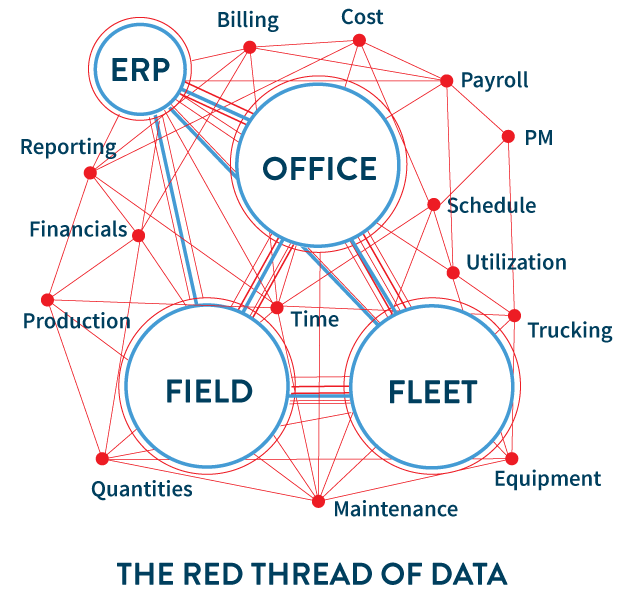
At the center of that philosophy is something we call the “red thread of data.”
The Red Thread of Data
Every construction project tells a story.
That story begins the moment a bid is approved and continues all the way through project completion, billing, and accounting. Along the way, information moves through estimating, scheduling, equipment deployment, trucking, payroll, quantities, production tracking, and financial reporting.
Most contractors experience those processes as disconnected systems. We see them as one continuous thread.

The “red thread of data” is the idea that every action on a project is connected. Pull on one part of the thread, and you should instantly understand what happened upstream and downstream.
If a foreman updates production in the field, accounting should immediately understand the cost impact. If equipment hours change, payroll, billing, and project management should all reflect that change without duplicate entry or confusion.
That visibility matters because contractors make decisions in real time. They don’t have the luxury of waiting days for disconnected systems to catch up.
Tractics was built to help contractors follow that thread clearly across the entire lifecycle of a project.
The Industry Didn’t Need More Software.
It Needed Better Software.
A lot of construction technology was designed decades ago in offices, far removed from the realities of the field. The people building the software often weren’t the people using it.
As a result, contractors were left juggling a patchwork of disconnected systems: multiple logins, duplicate data entry, inconsistent reporting, and workflows that created more frustration than efficiency.
Foremen have told us stories about spending 30 to 40 minutes every day completing reports they didn’t fully trust and didn’t want to do in the first place. Not because they didn’t care, but because the systems weren’t intuitive.
And in heavy civil construction, documentation isn’t optional. You don’t get paid without it.
That’s where our philosophy differs.
We don’t believe it’s the field’s responsibility to figure out complicated technology. Their job is to build roads, move dirt, lay pipes, and keep projects moving. The software should support that work — not interrupt it.
If crews avoid using a platform, that’s not a user failure. It’s a design failure.
A Personal Perspective That Shaped the Product
A lot of this philosophy comes from my father.
My dad spent his career as a master mechanic and pipefitter. He could build or fix just about anything you put in front of him. He was highly intelligent, incredibly skilled, and deeply knowledgeable about his craft.
But when you handed him an iPad with software he didn’t understand, he’d hand it right back.
And what stuck with me was this: a man with decades of expertise suddenly felt incapable because of bad technology design.
That never sat right with me.
Technology should make people feel more capable, not less.
That mindset shaped how we approached Tractics from the very beginning. We wanted to create software that respected the people using it — software that felt intuitive, approachable, and practical from the first interaction.
Why Elegance Drives Adoption
One of the biggest misconceptions in software is that simplicity means less sophistication.
In reality, elegance is incredibly difficult to achieve.
At Tractics, we spent a tremendous amount of time focusing on usability because adoption matters more than feature count. It doesn’t matter how powerful a platform is if nobody in the field wants to use it.
That philosophy influenced everything:
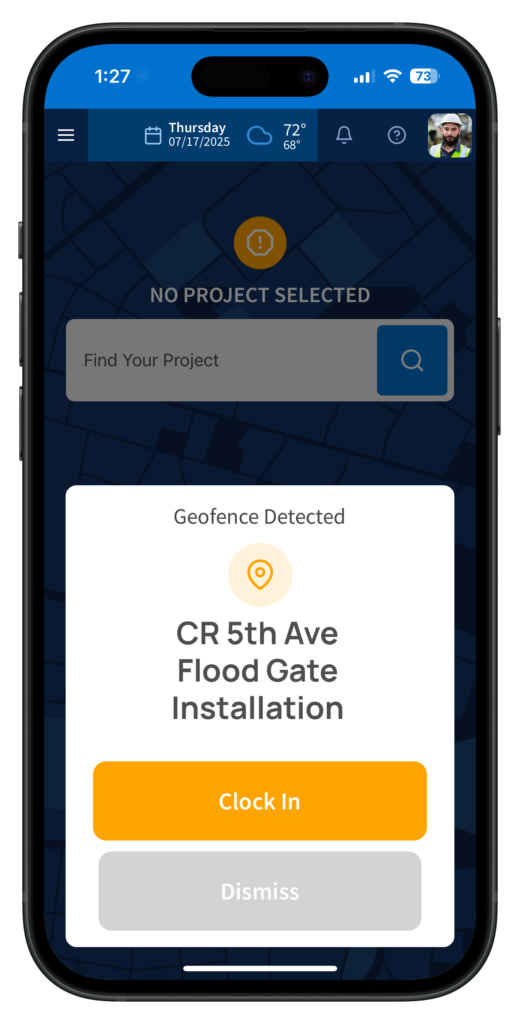
- Large, clear buttons designed for guys that work with their hands
- Fast workflows that reduce taps and unnecessary steps
- Spanish-language support for multilingual teams
- Flexible workflows that adapt to different contractor operations
- Integrated systems that eliminate duplicate entry
In today’s market, the amount of point solutions available would suggest that there is a whole world of solutions that work. These solutions are most valuable when teamed up with other software.
With this, contractors are going to 12 different places to get 20 different pieces of information on a daily basis. This simply doesn’t work with their workflow. Plus, when you bring it into the field, things can get even more messy.
For example, in OEM telematics, if crews have to go to 6 different places to track all of the contractor’s equipment, it ultimately ends in nobody tracking the equipment unless there are consequences for not doing so.
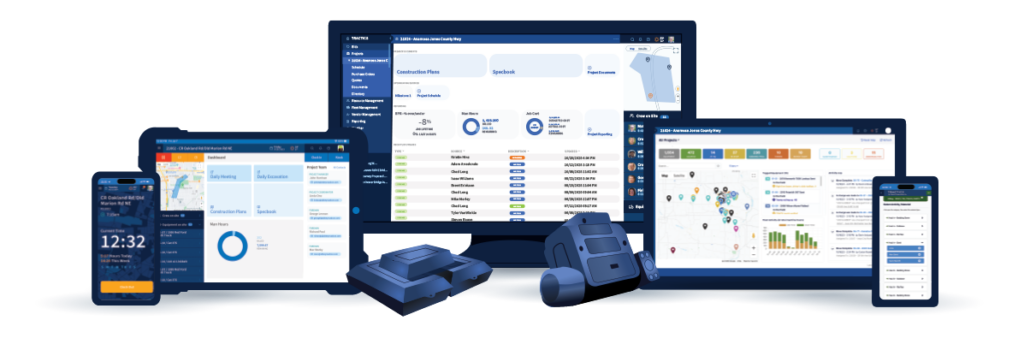
That’s where Tractics comes in. Everything between estimating and accounting is housed in one place.
The goal was never to overwhelm contractors with technology. The goal was to remove friction. When software becomes easier to use, everything downstream improves:
- Better adoption
- More accurate data
- Faster reporting
- Better accountability
- Stronger visibility across projects
The easier it is for crews to capture information, the better the quality of the data becomes. And better data leads to better decisions.
"The training support we’ve received from Tractics has been exceptional. Tractics worked with us to train 60 crew members, 9 foremen, and 6 office staff in just two days. The adoption has been seamless, and any challenges were quickly addressed."
Cory Phillips, Owner/President, C.P. Excavating
Adaptability Matters Because No Two Contractors Operate the Same Way
Construction is not a one-size-fits-all industry.
Every contractor operates differently. Every project has unique requirements. Every team has its own processes, workflows, and reporting expectations. That’s why adaptability became a core part of our product philosophy.
Contractors shouldn’t have to force their operations into rigid software structures that don’t reflect reality. Instead, technology should adapt to the way successful contractors already work.
Custom workflows, configurable templates, flexible reporting, and field-driven processes all help contractors maintain control over their operations instead of changing their business to fit the software.
The reality is simple: adoption improves when software feels familiar.
Extending the Red Thread into Accounting
One of the biggest gaps in construction technology has always existed between the field and office, specifically with accounting.
Field teams are capturing information every day, but finance teams often receive incomplete, delayed, or disconnected data. That creates billing issues, payroll headaches, production disputes, and unnecessary rework.
Often times, payroll and accounting don’t even know where the data originated from. A majority of their time is spent tracking down the source. That unnecessary work adds hours upon hours to the work week for teams in the office.
The connection between operations and accounting is where the red thread becomes incredibly important.
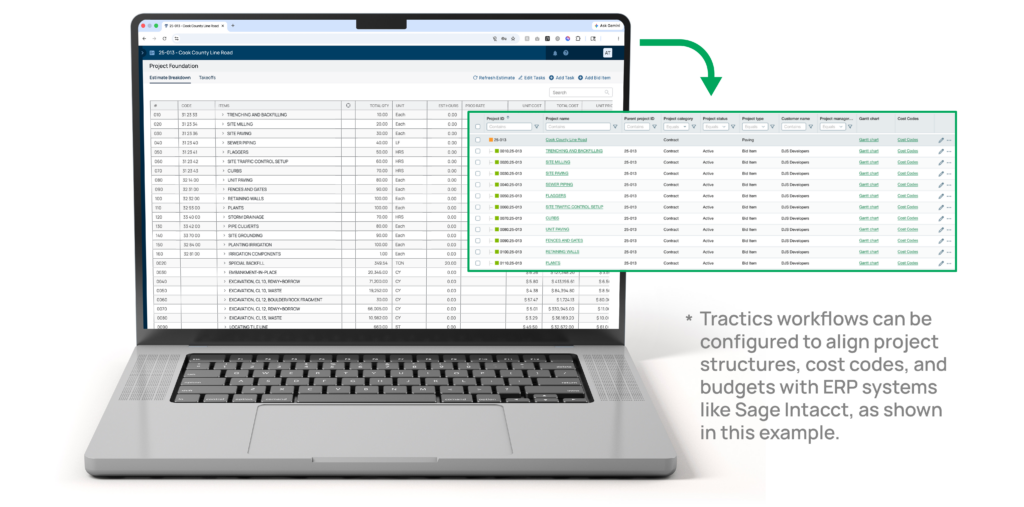
API integrations with ERPs like Sage Intacct and Trimble Vista, help bridge that gap by connecting real-time field activity directly to financial workflows.
When production data, equipment usage, labor hours, trucking, and quantities flow automatically into accounting systems, everyone gains better visibility.
That means:
- Fewer manual errors
- Faster billing cycles
- Cleaner documentation
- Better cost tracking
- More confidence in project financials
The field and the office stop operating as separate worlds, and they become part of the same operational story.
Building With Contractors, Not Just for Them
One of the things I’m most proud of is the relationship we’ve built with contractors.
We don’t believe innovation happens in a vacuum. The best ideas come directly from the field — from foremen, project managers, superintendents, payroll teams, and operations leaders dealing with real-world challenges every day.
That means our product evolution is driven by listening. Our customer service team spends hours out in the field with our customers. We iterate alongside our customers. We pay attention to how crews actually work. We refine workflows based on feedback from people living these problems daily.
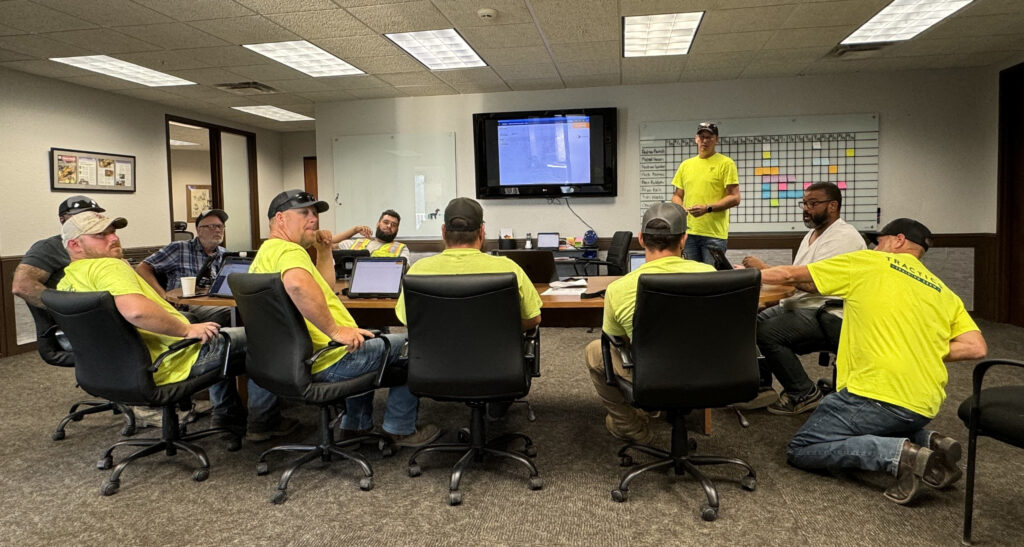
That collaborative approach has shaped not just our product, but our company culture here at Tractics.
We’re not building technology for the sake of technology. We’re building tools that make someone’s day easier. And in construction, that matters.
The Industry Is Ready for a Different Approach
The construction industry is changing.
Contractors are moving away from rigid legacy systems and toward platforms that are flexible, intuitive, and connected. The next generation of construction leadership expects better technology experiences because they’ve seen what modern software can look like in every other part of life:
- They want tools that work in real time.
- They want cleaner visibility.
- They want better accountability.
- They want systems crews want to adopt.
- They don’t want to disrupt current business
Most importantly, they want technology that helps them operate smarter without creating more complexity.
That shift is happening right now across heavy civil construction, and it’s not just about software features. It’s about trust.
Contractors want to know the systems they invest in are designed with their operational realities in mind.
The Real Goal
At the heart of all of this is something very simple: this isn’t about building software for the sake of revenue or growth metrics. It’s about creating something genuinely useful for the people who build our infrastructure every day.
Contractors need tools that help them deliver projects faster, safer, and more efficiently while reducing unnecessary frustration along the way.
That’s the mission.
When technology respects the people using it, when data flows clearly across the red thread of a project, and when software adapts to contractors instead of the other way around, the entire operation improves.
That’s what we believe construction technology should do.
And that’s why Tractics exists.
– Tyler VanWinkle, CEO, Tractics